
Tesla Unveils New Roadster With Rocket Thrusters, Sub-One-Second Acceleration and Flying Demonstration
 2028 Tesla Roadster
Elon Musk’s long-delayed electric supercar returns with SpaceX-inspired thrusters, astonishing performance claims, and a production target of 2028.
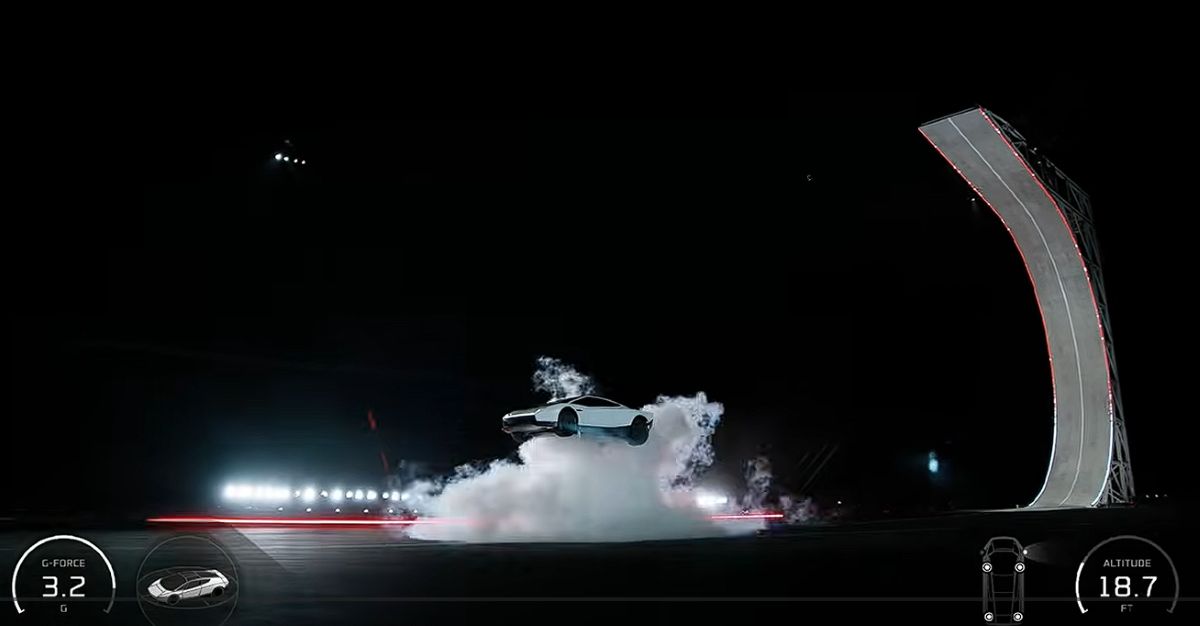
Tesla has unveiled its redesigned next-generation Roadster, showcasing an electric sports car that can briefly lift off the ground using rocket-style thrusters. The dramatic demonstration took place at a SpaceX facility in Texas on October 15, 2026, bringing the long-awaited project back into the spotlight after years of delays.

The new Roadster combines high-performance electric vehicle technology with experimental aerospace-inspired systems. However, while its airborne demonstration captured attention, questions remain about its final specifications, price, safety requirements, and how much of the technology will make it into production.
A flying demonstration unlike any other
The highlight of the reveal was a prototype driving upside down along a specially designed ramp before launching into the air, rotating, and landing back on its wheels. Tesla also demonstrated the vehicle jumping over other cars.
These manoeuvres relied on two unusual systems: a suction mechanism that helps hold the car against the ramp and compressed-gas thrusters that generate thrust for airborne movements. The demonstration took place in a controlled environment, so it should not be confused with proof that the production car can fly freely on public roads.
SpaceX-inspired thrusters bring new possibilities
Developed in collaboration with SpaceX, the optional thruster system is the Roadster’s most unusual feature. Rather than using conventional jet engines, it uses high-pressure gas released through directional nozzles to produce brief bursts of thrust.

Tesla has outlined three configurations: Performance, Thrust, and Rocket. The Performance model focuses on road and track use, while the Thrust version adds acceleration-focused thrusters. The single-seat Rocket configuration features a more extensive thruster system designed to enable the car’s most extreme airborne manoeuvres.
The Rocket version is particularly experimental. Its unusual propulsion system raises questions about safety, practicality, and regulatory approval, and its airborne capabilities are not approved for public-road use.
Supercar performance with ambitious claims
Tesla claims the thruster-equipped Roadster can accelerate from zero to 60 mph (97 km/h) in under one second. The company has also cited a top speed exceeding 230 mph (370 km/h) and a driving range of more than 300 miles (480 km) per charge.
These figures remain manufacturer claims rather than independently verified production-car results. The final vehicle will need to demonstrate how its performance, battery range, and thruster technology work under real-world conditions.

The exterior features a sleek, angular design, dramatic doors, and active aerodynamics. Inside, the car adopts a minimalist cockpit with a yoke-style steering control and a central display, while the Rocket configuration sacrifices the passenger seat to accommodate its specialised equipment.
From a 2017 concept to a planned 2028 production
Tesla first revealed its next-generation Roadster in 2017, with deliveries originally expected in 2020. The project missed that target and faced repeated delays as Tesla focused on other vehicles and technologies.
Elon Musk now says production is targeted for 2028. However, given the project’s history, the timeline should be treated as a target rather than a guarantee.

Tesla has not announced a confirmed final retail price for the redesigned Roadster. The company previously quoted a starting price of US$200,000 for the earlier version in 2017, but that historical figure should not be treated as the confirmed price of the new model. Reservation deposits listed for the different configurations are also not the same as final purchase prices.
Can the Roadster really become a flying car?
The demonstration shows that Tesla is exploring ways to combine electric vehicle engineering with aerospace technology. It does not establish that the Roadster will become a practical flying car for everyday use.
The most extreme capabilities raise significant questions about occupant safety, public-road regulations, and how the technology would perform outside a controlled test environment. Buyers will also need to know which features will be available on the production models and which remain experimental.
For Tesla, the Roadster is more than an electric sports car. It is a showcase for the company’s engineering ambitions and its collaboration with SpaceX. If Tesla can turn the prototype into a production-ready vehicle, it could become one of the most unusual high-performance cars on the market.
For now, the flying demonstration has delivered the spectacle. The real test will be whether Tesla can meet its production target and deliver a car that lives up to its extraordinary promises.
Discover more from onetechavenue
Subscribe to get the latest posts sent to your email.