
Meta’s New VR Glasses Could Change What We Think of as a VR Headset
Meta’s most advanced VR device yet ditches the bulky headset design for lightweight glasses paired with apowerful compute puck.
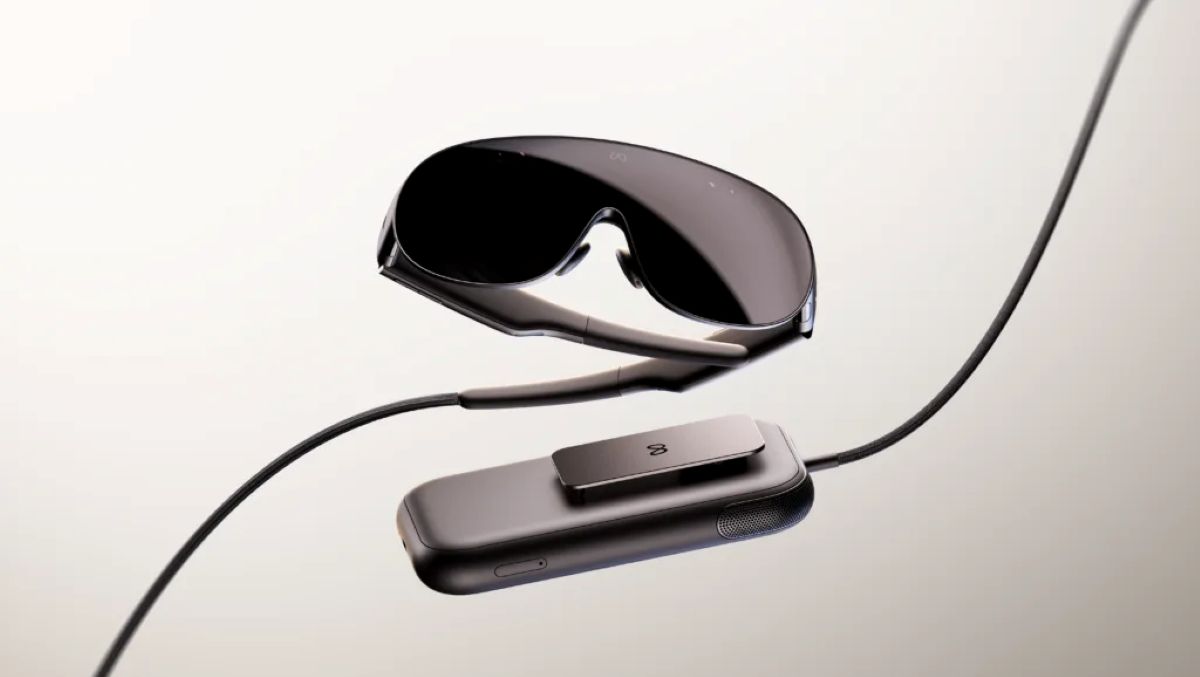
At Connect 2026, the company introduced its new Meta VR Glasses, which it describes as its most advanced VR device yet. Unlike the familiar Meta Quest headsets, the new device looks much more like a pair of glasses, with most of the processing hardware moved into a separate pocket-sized compute puck.
The result is a device that weighs around 100 grams, making it dramatically lighter than a traditional VR headset such as the Meta Quest 3.

The Meta VR Glasses feature a 5K Infinite Display built around micro-OLED panels, delivering 37 pixels per degree. The glasses also use pancake lenses and support Dolby Vision, while built-in Dolby Atmos spatial audio is designed to make movies, games and other content feel more immersive.
Meta is also positioning the glasses as a personal entertainment device. The company has highlighted support for 3D movies, including an IMAX partnership, alongside services such as Disney+, Prime Video and YouTube.

For sports fans, Meta is also working with partners including ESPN and UFC to bring immersive live sports experiences to the platform.
Another major difference is how users interact with the device. Instead of relying primarily on handheld controllers, Meta VR Glasses combine eye tracking, hand gestures, voice commands and Meta AI. Users can look at something, use their hands to interact with virtual objects or simply ask Meta AI to perform certain tasks.
The glasses also feature passthrough capabilities, allowing users to remain aware of their physical surroundings while interacting with virtual content.
For productivity, Meta says the glasses can create a large virtual workspace with multiple screens. Users can also connect them to a Mac or Windows PC, effectively turning the glasses into a private multi-monitor setup that can be used almost anywhere.
How different is it from the Quest 3?
The Meta VR Glasses aren’t really a direct replacement for the Meta Quest 3. Instead, Meta is taking a completely different approach to VR hardware. The Quest 3 puts its processor, battery and display inside the headset itself. The new VR Glasses move much of that hardware into a separate compute puck connected to the glasses.

That trade-off allows Meta to make the glasses considerably lighter, but it also means the device isn’t completely self-contained. The Quest 3 also has a wider 110-degree horizontal field of view, compared with around 70 degrees on the Meta VR Glasses. Meanwhile, the new glasses use micro-OLED displays, while the Quest 3 uses LCD panels.
In other words, the Quest 3 remains the more traditional standalone VR and mixed-reality headset, while Meta VR Glasses are aimed at something closer to lightweight spatial computing, entertainment and productivity.
Perhaps the most interesting thing about Meta VR Glasses isn’t any single specification. It’s the direction Meta is taking.Instead of simply making VR headsets more powerful, the company is trying to make them smaller, lighter and easier to wear for longer periods.

There are still compromises, particularly the need for a separate compute puck and the narrower field of view. But the idea of having a high-resolution virtual display, AI, spatial audio and multiple virtual screens in something closer to ordinary eyewear is certainly an interesting direction for VR.
Meta says the Meta VR Glasses are expected to launch in spring 2027 for $1,299.99. That puts them firmly in the premium category, but it also makes clear that Meta sees this as a different class of device from its mainstream Quest headsets.
Discover more from onetechavenue
Subscribe to get the latest posts sent to your email.